
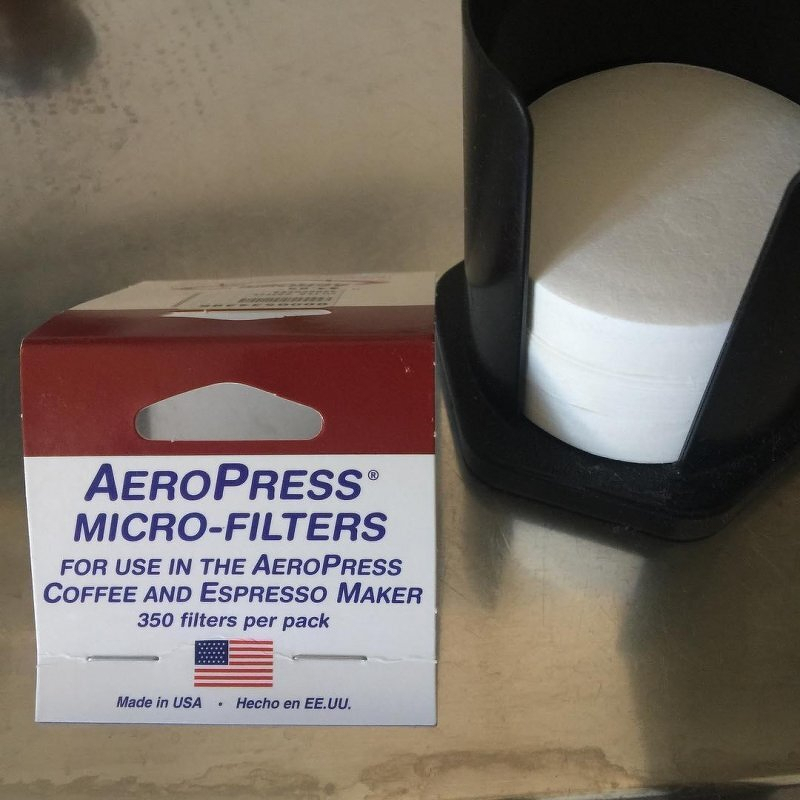
This is a pretty exciting moment; my first pack of replacement filters.
Aaron Davis wonders "when are you an actual ‘citizen’, that is when do you belong to, in or are a part of the Indieweb?" To me, "belong to", "in" and "part" signify slightly different depths of commitment, none of which conveys "citizenship". The way I understand it, citizenship is granted by some other authority. You can't just claim it for yourself.
I like Kartik Prabhu's idea that posting to a domain you own is all it takes. "Everything else is a bonus". But that's a little like Robinson Crusoe being a citizen of his island. Interaction with others matters too.
#indiewebcitizen #indieweb

I love reading about how other people organise their reading and writing, although it seldom impacts my own system (which I hesitate to call a system). Chris Aldrich's post is no exception, with lots of great ideas about how to find, filter and act on the firehose of stuff that's out there. I can't help but wonder whether Chris and I have discussed Zettelkasten methods in the past. https://
@SlackHQ I like the extra functionality of, eg, reminding myself about messages and the overall usability of Slack. I wouldn't want to be tied to a closed silo though. Bridging with IRC allows #indieweb people to own their messages.
The good news is that #indieweb -- the main channel for which I want both IRC and Slack -- should be OK as it uses the Slack API. Or so I am reliably informed ...
So disappointing that @slackhq is giving up on the gateway between Slack and IRC. I wonder why. No reason given. https://
Duncan says:
(Researchers themselves are sometimes the most reluctant to undertake user research before spending serious amounts of money on ineffective websites.)
Strange, isn't it.
(The 9 rules themselves are at Medium and, I hope, somewhere else too. Because you never know.)